What is island food in Vanuatu?
Island food is the everyday cuisine of Vanuatu. It is often called aelan kakae or kastom kakae.
It is based on garden produce, coconut, seafood, meat, greens and seasonal fruit. It includes food prepared for ordinary meals, market stalls, village gatherings and celebrations.
The cuisine is not one fixed menu. It changes between islands, families, gardens and seasons.
Common ingredients include:
- Taro
- Yam
- Cassava
- Kumala, or sweet potato
- Banana and plantain
- Coconut
- Aelan cabbage, or island cabbage
- Taro leaves
- Fish and other seafood
- Chicken
- Pork
- Tropical fruit
- Nangai nuts
This is the basis of Vanuatu food and traditional Vanuatu food. It is also the focus of Papaya Loco’s Island Food cooking class.
Why are gardens and markets important to Vanuatu cuisine?
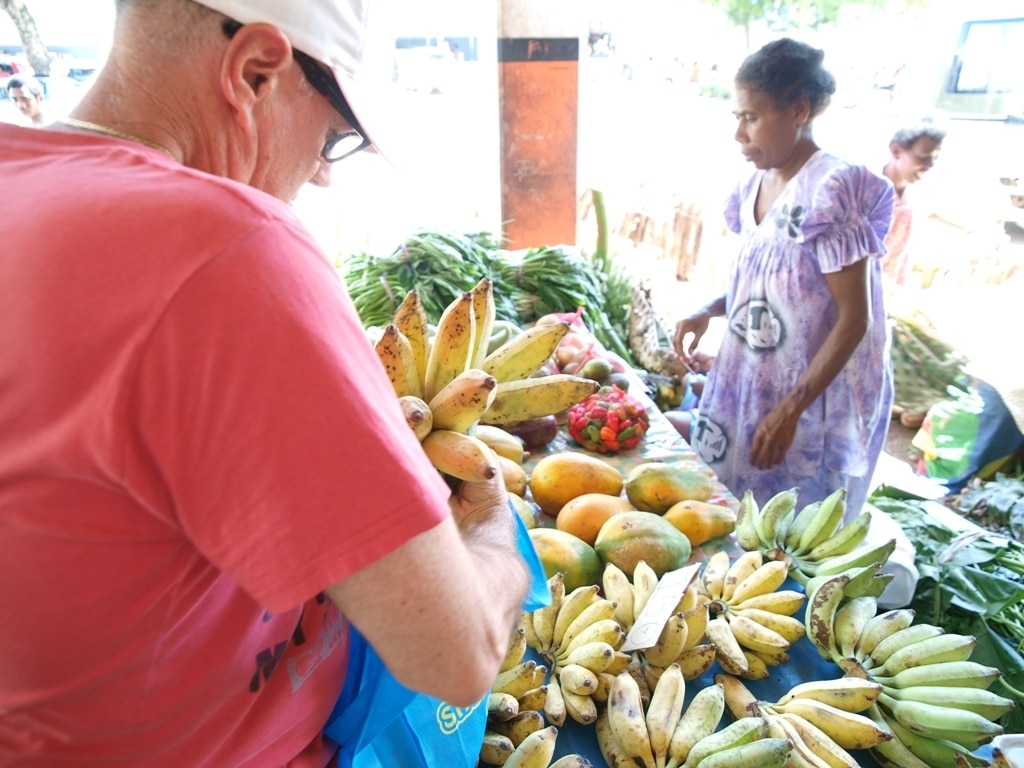
Many Ni-Vanuatu families grow a significant amount of their food. Village gardens supply root crops, bananas, greens, herbs and other seasonal produce.
Markets connect growers with households, cooks and visitors. The available ingredients can change from one day to the next.
This affects the meal.
A good cook does not always follow a fixed shopping list. The menu may change because a particular fish, banana, root crop or bunch of greens is available that morning.
This relationship with the land is central to island food. Ingredients are selected for freshness and use. Food is prepared in quantities that suit families and groups.
The market is also part of the food experience. It shows what is being grown, what is in season and what local cooks use every day.
How is traditional Vanuatu food cooked?
Traditional cooking methods are practical. They use heat, leaves, stones, coconut and fire.
Earth ovens and stone ovens
An earth oven uses heated stones to cook food slowly.
A fire heats the stones. Food is wrapped in leaves and placed over or among the hot stones. More leaves cover the food. Soil or other covering material helps retain the heat and steam.
The method works well for large quantities. It also keeps food moist and allows root crops, meat, fish and vegetables to cook together.
In Vanuatu, the method may be described as a stone oven, earth oven or, in a wider Pacific context, an umu. Names and techniques vary between places.
Banana-leaf wrapping
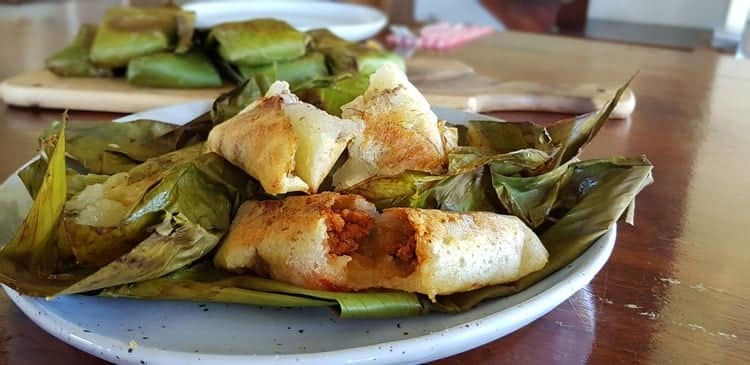
Banana leaves protect the food and hold in moisture. They are used for dishes such as laplap, tuluk and simboro.
The leaves also make it possible to cook several ingredients together without needing a metal pot.
Coconut milk and coconut cream
Coconut is used in several forms.
The flesh can be grated and pressed to produce coconut milk or thick coconut cream. These are used in sauces, stews and leaf-wrapped dishes.
Coconut cream adds moisture and flavour to root crops. It is also used with fish, greens and bananas.
A simple banana cooked with coconut cream can be a complete dessert or side dish. The method is direct. The ingredients do the work.
Fire grilling
Fish, chicken and pork can be grilled over fire. This gives the outside a cooked, smoky surface while keeping the inside moist.
Grilling also suits group cooking. Several portions can be prepared at the same time and served as soon as they are ready.
Preserving and fermenting
Preserving, drying and fermenting help extend the use of seasonal food. These methods vary between islands and households.
They also show that island food is not limited to one cooking technique. It includes methods for using food immediately and methods for managing abundance.

Which dishes represent island food?
Several dishes are closely associated with Vanuatu cuisine.
Laplap
Laplap is widely recognised as Vanuatu’s national dish.
It is made from grated root crops such as taro, yam or cassava. The mixture is combined with coconut cream and may be layered with fish, chicken or pork.
The food is wrapped in banana leaves and cooked with hot stones. The result is dense, soft and rich, with an earthy flavour from the cooking method.
Laplap is served in homes, markets, ceremonies and communal meals.
Tuluk
Tuluk uses grated cassava as a casing. It is filled with seasoned meat, often pork or beef.
The wrapped parcels are steamed, baked or cooked with hot stones. Tuluk is common as a market food and is practical to serve to groups.
It is one of the dishes taught through Papaya Loco’s Island Food sessions.
Simboro
Simboro is made by wrapping a filling in leaves. Depending on the recipe, the filling may include root crops, coconut or other local ingredients.
The parcels are cooked in coconut milk or coconut cream. The leaves hold the mixture together and give the dish its texture.
Simboro is suitable for everyday meals and larger gatherings.
Coconut-based fish dishes
Fresh fish works well with coconut milk, coconut cream, greens and local herbs.
The preparation can be simple. The important steps are cleaning the fish, controlling the heat and adding the coconut at the correct stage.
Banana with coconut cream
Banana and plantain are used in savoury and sweet dishes.
At Papaya Loco, pan-fried plantain with cinnamon sugar and coconut cream is a popular dessert. It uses a familiar ingredient in a simple local combination.
How has Vanuatu cuisine changed over time?
Vanuatu cuisine has developed through movement and exchange.
Colonial contact introduced new trade relationships, imported ingredients and cooking equipment. Rice, flour and other imported foods became part of the modern diet without replacing garden-based cooking.
Chinese and Indo-Vanuatu communities have also contributed to the food landscape through restaurants, markets, ingredients and cooking practices.
Portuguese and wider Pacific trading routes form part of the longer history of ingredients and techniques moving between regions. Food cultures rarely develop in isolation.
These influences add layers to Vanuatu’s food culture. They do not remove its foundation.
Root crops, coconut, seafood, leafy greens, fire cooking and communal meals remain central. This is the travelling-through-food-culture idea: every cuisine contains evidence of movement, contact and adaptation.
Learning Vanuatu cuisine is therefore a way to learn about Vanuatu itself.
Why is food central to community life?
Food is part of hospitality in Vanuatu.
Meals are prepared for families, visitors, ceremonies and celebrations. Cooking is often shared. Preparation can involve gathering ingredients, grating roots, opening coconuts, wrapping leaves and managing the fire.
The meal is not separated from the people who produce it.
Village gardens, markets and kitchens are connected. Seasonal abundance is shared or preserved. Large dishes are prepared for more than one person.
This is why island food is not best understood as a restaurant performance. It is a living part of everyday life.
The most useful class should explain that setting while allowing guests to take part in the work.
What should a real island food cooking class include?
Island food can look simple. It is not always simple to teach.
The texture of grated cassava matters. The amount of coconut cream matters. Leaf parcels must be wrapped correctly. Heat must be controlled. Root crops need enough time to cook. Fish and meat need suitable preparation.
A properly run island food cooking class should include:
- Ingredient selection
Guests should see how local produce is chosen at a market or from local growers. - Clear demonstrations
The instructor should show each method before guests begin. - Real preparation work
Guests should grate, wrap, mix, season, shape and cook the food themselves. - Coconut preparation
The class should explain how coconut milk and cream are made and used. - Traditional cooking methods
Where practical, the session should include an earth oven, stone cooking, steaming or fire grilling. - Practical adaptation
The menu should be able to change when the market has different ingredients. - A shared meal
Guests should eat the food together and understand how the dishes fit into a communal lunch.
Papaya Loco’s small-format sessions are led by Marcus at Papaya Villa on Eton Reef, Efate. Classes have a maximum of six guests. Many dishes use ingredients from local growers and markets.
The format is hands-on. Guests do not only watch a demonstration. They help prepare the meal from the first ingredient to the final shared table.

Why does island food suit a long shared lunch?
Island food is designed for sharing.
Laplap, tuluk, simboro, grilled fish, root crops, greens and coconut-based dishes can be prepared in quantity. Several people can work on different parts of the meal.
This creates a natural group class.
At Papaya Loco, the cooking session leads into a long lunch at Papaya Villa. The food is served in the same setting where it was prepared.
This format reflects how many island meals work. Cooking and eating are connected. Guests learn the methods, then see the dishes served together.
For visitors, this is a practical form of culinary tourism in Vanuatu. For locals and expats, it is an opportunity to examine familiar ingredients in more detail.
To ask about dates and availability, use the Papaya Loco booking page.
Island Food FAQ
What does island food mean in Vanuatu?
Island food means the local cuisine of Vanuatu. It is based on garden produce, root crops, coconut, seafood, meat, greens and tropical fruit. It is also called aelan kakae or kastom kakae.
What is kastom kakae?
Kastom kakae means traditional food connected to Ni-Vanuatu customs and local ways of living. It includes ingredients, cooking methods, sharing practices and dishes such as laplap, tuluk and simboro.
Is Vanuatu food mainly seafood?
Seafood is important, especially in coastal communities. Vanuatu cuisine also includes taro, yam, cassava, kumala, coconut, greens, chicken, pork, bananas and other local produce.
What happens in an island food cooking class?
Guests select or examine local ingredients, learn the cooking methods and prepare the dishes themselves. Papaya Loco classes may include coconut work, banana-leaf wrapping, traditional cooking methods and a shared lunch.
Where are Papaya Loco’s island food classes held?
Classes are held at Papaya Villa on Eton Reef, Efate. Sessions are small-format and led by Marcus.
How can a class be booked?
Contact Papaya Loco through the booking page or the details listed there.
Island food is a practical way to travel through Vanuatu’s food culture. The ingredients come from the land and sea. The methods come from local knowledge. The meal is shared.
For a direct experience, see the Island Food cooking class.